Optimizing Bio-Inspired and Implantable Batteries for Next-Generation Medical Devices
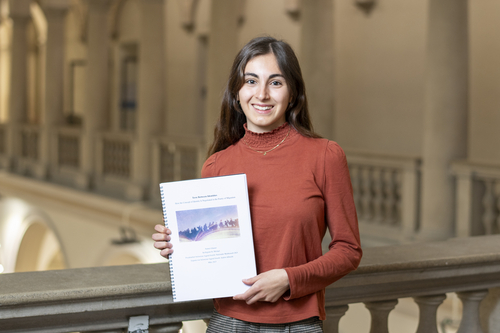
Modern implantable medical devices, such as pacemakers or neural sensors, require reliable power sources. Currently, most rely on lithium-ion batteries, which pose health risks: they are rigid, can irritate tissue, leak toxic materials, and generate heat during use. To find a safer alternative, nature offers a fascinating blueprint: the electric eel, which uses ion gradients within specialized organs to produce electricity. Inspired by this, a soft, water-based hydrogel battery has been developed. Because it is flexible, transparent, and thermally stable, it shows promise for powering implantable devices. My work focused on improving these gel batteries by adding charged polymers. The experiments increased the battery’s voltage by up to 20%, but also introduced a challenge: the polymers blocked ion movement, increasing resistance and reducing power output. A potential solution is to permanently bond these polymers to the gel structure, keeping pathways clear. By refining this process, we can create sustainable, life-saving implants that are soft, safe, and entirely free from the risks of leaks or overheating associated with conventional batteries.
Prix spécial « London International Youth Science Forum » - Invitation à participer au camp d’été scientifique London International Youth Science Forum. Chaque année, environ 500 étudiant·e·s âgé·e·s de 16 à 21 ans et venant de 70 pays profitent de ce camp d’été MINT de 15 jours. Le programme comprend des conférences données par des scientifiques de renom, des visites de laboratoires et d’universités, ainsi que des activités culturelles internationales.
Tuteur : Tobias Fuhrer